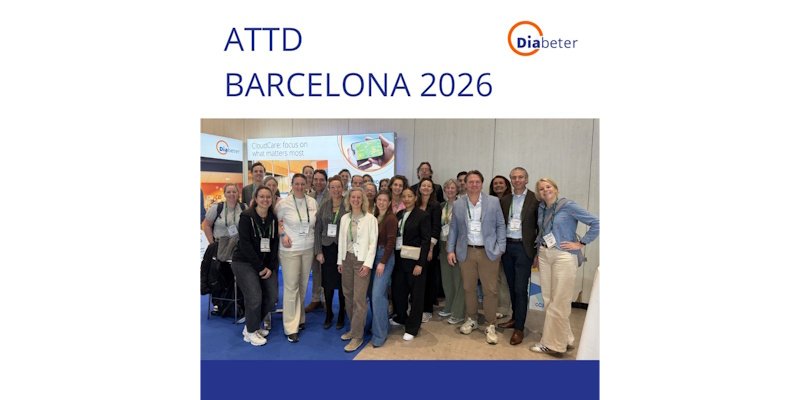
ATTD 2026: From Advanced Technology to Truly Personalised Diabetes Care
19th International Conference on Advanced Technologies & Treatments for Diabetes (ATTD) Barcelona, March 11–14, 2026
The annual ATTD conference is one of the leading international forums on innovation in diabetes technology and treatment. Over recent years, the field has moved rapidly from improving glucose monitoring and insulin delivery toward broader questions: how can technology reduce daily burden, support decision-making, and improve quality of life? At ATTD 2026, this shift became even more visible. While technological innovation remains central, the focus increasingly lies on integration, personalisation, and real-world impact.
Overview of key developments
A central theme throughout the conference was the continued maturation of automated insulin delivery (AID) systems. Advances are no longer limited to glycaemic performance under controlled conditions, but increasingly address real-world use: adaptability during exercise, usability in daily life, and long-term sustainability. This aligns closely with Diabeter research showing that technology outcomes depend not only on system performance, but also on user experience and behavioural integration.
At the same time, continuous glucose monitoring (CGM) continues to expand across populations. New evidence supports its benefits beyond traditional target groups, reinforcing the importance of broader access. These developments resonate with Diabeter’s work on population health management and data-driven care, where large-scale CGM data are used to proactively identify individuals in need of support.
This latter theme was also reflected in Diabeter’s own contribution to ATTD. In a multicentre observational study, the CloudCare population health management system was evaluated across several European centres. Interim results showed that CloudCare was associated with increased treatment satisfaction and fewer face-to-face consultations, while maintaining glycaemic outcomes. Effects were consistent across centres with different patient populations and care pathways, supporting the scalability of this approach. This work builds on earlier Diabeter publications on data-driven care and illustrates how continuous data streams can be translated into proactive, need-driven care pathways.
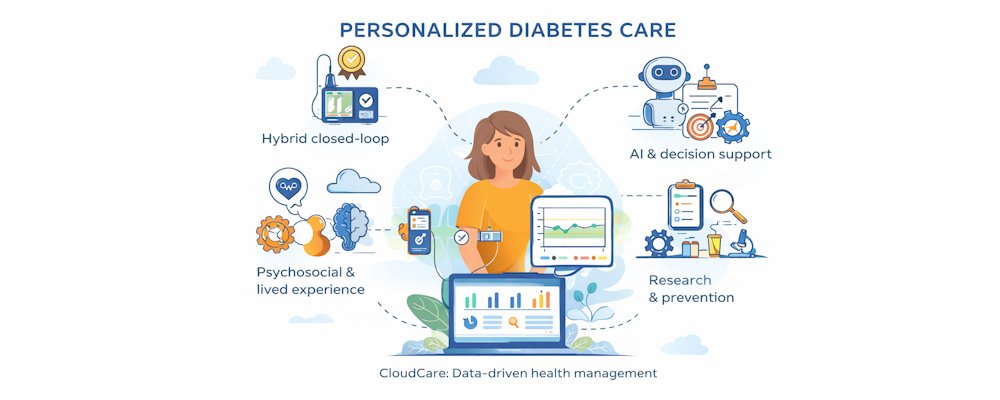 Another major development is the rapid emergence of artificial intelligence (AI) and decision-support systems. From adaptive algorithms in closed-loop systems to predictive analytics, AI is increasingly used to anticipate glucose trends and support clinical decisions. This reflects a broader transition toward more proactive and personalised care models—an approach also seen in Diabeter initiatives such as CloudCare and real-time monitoring.
Importantly, ATTD 2026 highlighted that technological progress alone is not sufficient. Multiple sessions emphasised the need to incorporate psychosocial outcomes and lived experience into both research and clinical practice. This includes understanding how people interact with technology, how they balance diabetes with daily life, and how emotional burden influences outcomes. These themes closely connect to Diabeter research on goal conflicts in emerging adults and on improving psychosocial measurement through innovative PROM approaches.
Finally, there was continued attention to disease modification and early intervention in type 1 diabetes, including screening strategies and immunomodulatory approaches. While still in development, these efforts point toward a future where care may extend beyond management toward prevention and preservation of beta-cell function.
Key takeaways
- Diabetes technology is increasingly evaluated in real-world settings, with a focus on usability, scalability, and individual variability.
- The integration of AI and large-scale data is accelerating the shift toward proactive and personalised care.
- There is growing recognition that psychosocial factors and lived experience are essential components of diabetes outcomes.
Implications
ATTD 2026 underscores a broader transition in diabetes care: from technology-driven innovation to person-centred, data-informed care ecosystems. For clinical practice, this means moving beyond isolated metrics toward integrated approaches that combine glucose data, behavioural patterns, and psychosocial context. For Diabeter, these developments closely align with ongoing research and care innovations. Work on population health management (such as CloudCare), real-world evaluation of advanced technologies, and integration of psychosocial assessment into routine care all contribute to a model in which technology supports not only glycaemic outcomes, but also meaningful improvements in daily life.